Google I/O 2026 Recap: Gemini 3.5, AI Search, Smart Glasses, and Developer Tools
Google I/O 2026 was built around the agentic Gemini era. This recap covers Gemini 3.5 Flash, Gemini Omni, AI Search, the Gemini app, Antigravity, Android XR smart glasses, and Flow.
Contents
English Version
Updated: 2026-05-28<br/> Sources: Google's official I/O 2026 announcement roundup, Sundar Pichai's keynote transcript, and product updates for the Gemini app, developer tools, Android XR and Google Flow. This article has been rewritten and reorganized for Finding AI Tools. Images are from the official Google Blog.
The key phrase at Google I/O 2026 was not "another chatbot." It was the agentic Gemini era. Google wants Gemini to answer less like a static assistant and act more like a task system: searching, checking context, creating interfaces, calling tools and following through when users allow it.
The volume of announcements was large, but the direction was simple. Google is pushing Gemini into faster models, more proactive assistants, a stronger Search entry point, developer agents, creative tools and devices that sit closer to the real world.
The Big Picture: Gemini Becomes a System Layer
Sundar Pichai shared several scale numbers during the keynote. Google now has 13 products with more than 1 billion users each, and five products with more than 3 billion users. AI Overviews has more than 2.5 billion monthly active users, AI Mode passed 1 billion monthly active users within a year, and the Gemini app grew from 400 million monthly active users last year to more than 900 million.
The token numbers are even more revealing. Google says it processed 9.7 trillion tokens per month two years ago, around 480 trillion at last year's I/O, and more than 3.2 quadrillion per month today. In practice, Gemini is no longer just an app. It is becoming the shared AI layer behind Search, Workspace, Android, developer platforms and creative tools.
That explains the real theme of I/O 2026. Google does not only want to compare chat interfaces with ChatGPT. It wants AI inside the search box, browser, email, docs, phone, glasses and developer environment.
Gemini 3.5 Flash: Faster Agentic Work
Google officially launched Gemini 3.5 Flash, the first model in the Gemini 3.5 series. It is designed to deliver Flash-level speed while approaching the intelligence level of much larger flagship models. It is available through Google Antigravity, the Gemini API, Google AI Studio and Android Studio.
Google positioned Gemini 3.5 Flash for long-horizon agentic tasks. The official benchmarks include Terminal-Bench 2.1, GDPval-AA and MCP Atlas. The point is not just answering questions correctly; it is whether the model can plan, use tools, make changes and iterate.
Gemini 3.5 Pro is also coming. Google said the Pro model is already being used internally and is expected to roll out next month. For developers, the split is clear: 3.5 Flash handles frequent, fast and executable workloads, while 3.5 Pro should cover harder reasoning scenarios.
Gemini Omni: A New Multimodal Creation Core
Gemini Omni is one of the most important model announcements from I/O 2026. Its long-term goal is to create any output from any input. The first release starts with video outputs, with image and text expected to follow over time.
Google emphasized Omni's stronger understanding of the physical world, including gravity, kinetic energy and fluid dynamics. That matters for video generation because realism is not just about resolution. Motion, continuity and stable characters are usually what make generated video believable.
Omni is coming to the Gemini app, Google Flow and YouTube Shorts Remix. In the Gemini app, users can edit videos conversationally. In Flow, creators can iterate on scenes, characters and style. In YouTube Shorts, eligible videos can be remixed with user prompts. Generated content includes SynthID watermarking and can be verified through Gemini, Chrome and Search.
Search Becomes a Task Entry Point
Search remains Google's most important product surface, so the AI Search upgrade matters. Google says AI Mode has already passed 1 billion monthly active users and will now use Gemini 3.5 Flash as the default model globally.
The new Search box can take text, images, files, videos and Chrome tabs. Users are no longer limited to typing keywords. They can hand Search more of the current context. Google is also blending AI Overviews and AI Mode into a more continuous experience: overview first, follow-up conversation next, and links still available for deeper reading.
The bigger shift is Search agents. Google is starting with information agents that can monitor a topic, project or task in the background. They can scan the web, news, social posts and real-time data for finance, shopping and sports, then send synthesized updates when something changes.
Google also showed Generative UI. Search can generate tables, charts, interactive components or task panels on the fly. This will be powered by Antigravity and Gemini 3.5 Flash and is planned to roll out for free this summer.
Shopping is becoming part of the same flow. Universal Cart will collect products added from Search, Gemini, YouTube and Gmail, then help compare prices, check compatibility and use Google Wallet, offers and loyalty information to guide checkout. This is less about product recommendation and more about merging search, comparison and purchase into one workflow.
The Gemini App Gets More Proactive
The Gemini app update is about proactivity. Google introduced Daily Brief and Gemini Spark, which cover morning planning and longer-running task execution.
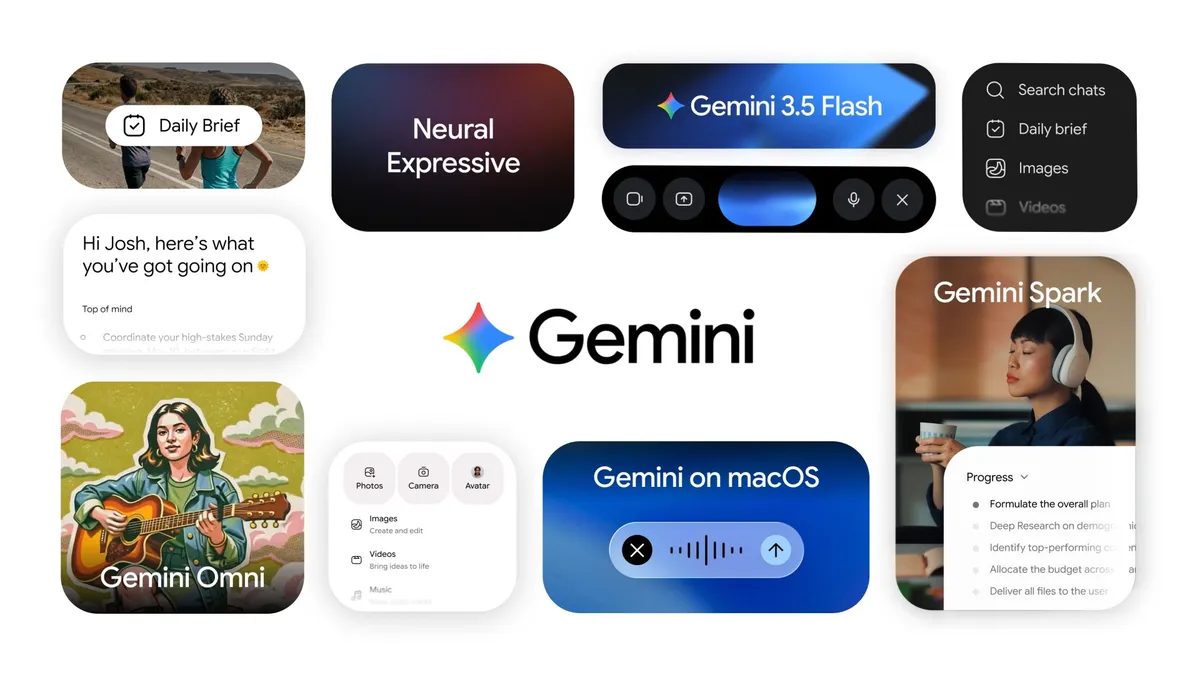
Daily Brief is a morning briefing agent. Once users opt in, it can work across connected apps like Gmail and Calendar to pull urgent updates, upcoming events and follow-up items into a skimmable summary. It is not just shortening emails. It tries to help decide what deserves attention first.
Gemini Spark is closer to a personal AI agent. It runs on Gemini 3.5 and the Antigravity harness, and because it is cloud-based, it can keep working in the background. Google's examples include checking monthly credit card statements for new subscriptions, summarizing school updates and turning meeting notes into Google Docs with a draft launch email.
Google also emphasized control. Spark only works when users turn it on and choose which apps it can access. It is designed to ask before high-stakes actions such as spending money or sending emails. That boundary is important because useful agents inevitably touch sensitive permissions.
Developer Tools: Antigravity Moves to the Center
For developers, the biggest I/O 2026 story is Antigravity becoming a real product family. Google announced Antigravity 2.0 for desktop, Antigravity CLI, Antigravity SDK and integration with the Gemini Enterprise Agent Platform.
Antigravity 2.0 is an agent-first development environment. It supports multiple agents working in parallel, dynamic subagents, scheduled tasks and background automation. The CLI is for developers who prefer the terminal, while the SDK exposes the same agent harness for custom applications.
Managed Agents in the Gemini API are also important. Developers can create an agent with a single API call. The agent can reason, use tools and execute code in an isolated Linux environment. It supports persistent state and custom behavior through markdown instructions and skills.
Google AI Studio is also expanding. A mobile app is available for pre-registration, Workspace APIs can be called natively by agents, projects can be exported to Antigravity for local development, and native Android support now includes a path to publish test builds through the Play Console.
Android XR: Smart Glasses Arrive First as Audio Glasses
Google gave Android XR a more concrete timeline. The platform, built with Samsung and Qualcomm, will first ship audio smart glasses this fall. Display glasses are still coming later.
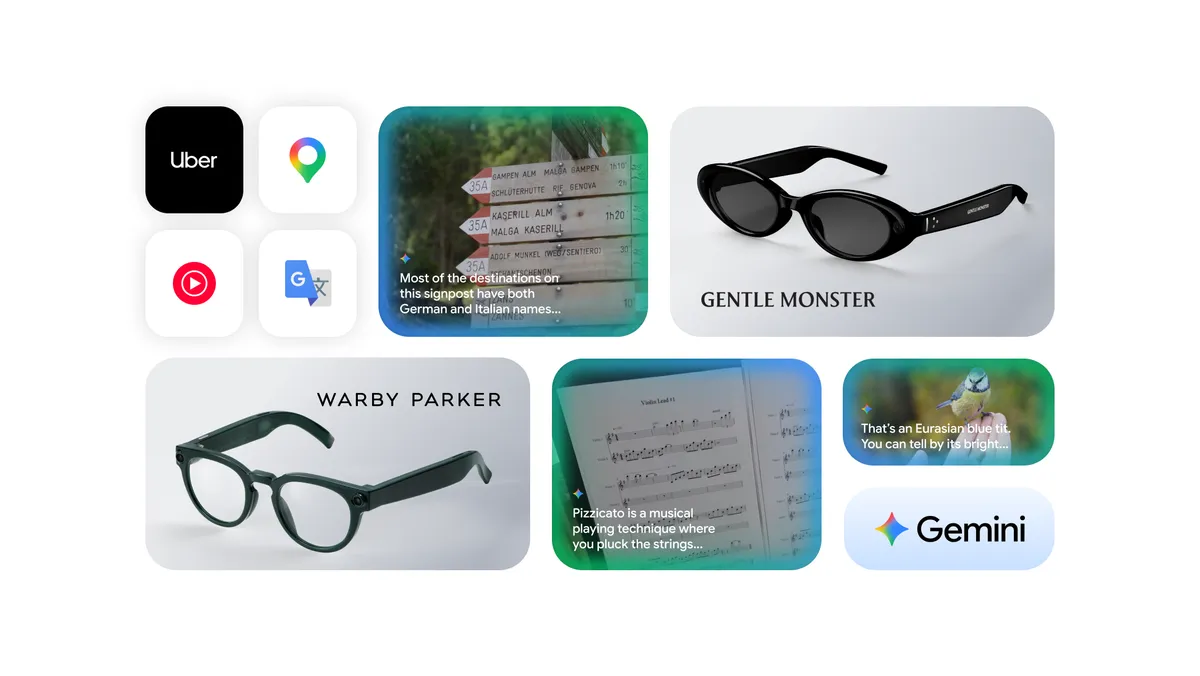
The pitch is low-friction help. Users can say "Hey Google" or tap the frame to ask Gemini about what they see, get directions, send texts, take calls, summarize missed messages, capture photos and video, or use Nano Banana to make simple photo edits.
Google also mentioned real-time translation, adding stops to routes, using apps such as Uber and Mondly, and pairing with both Android and iOS phones. The strategy is clear: start with a lightweight, all-day Gemini entry point, then move toward richer display-based experiences later.
Flow, YouTube and Creative Tools Keep Expanding
Google Flow was introduced last year as an AI video tool built with filmmakers in mind. This year it is becoming a broader creative studio with Gemini Omni, Flow Agent, custom tools and deeper Flow Music editing.
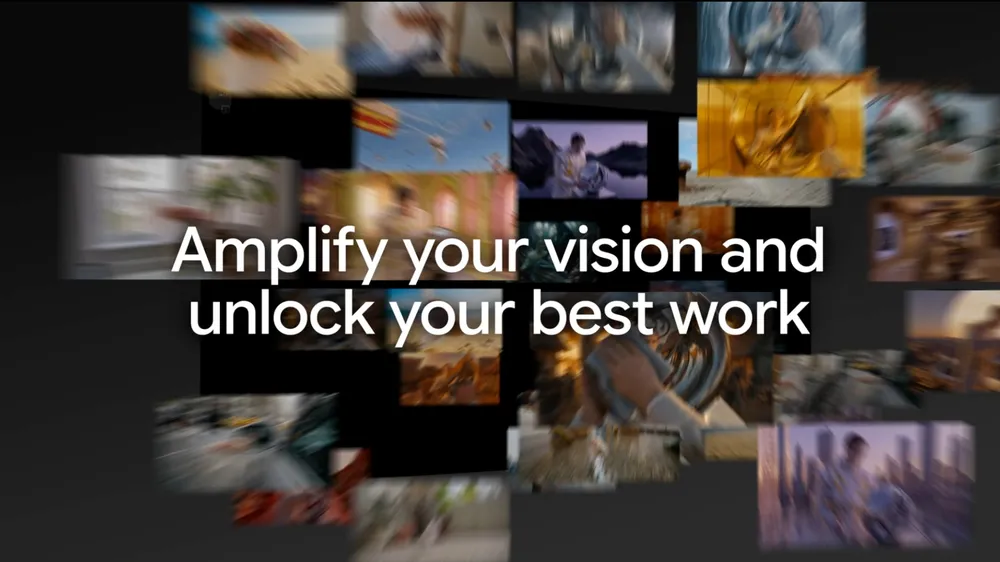
Flow Agent can help during brainstorming, generation, editing and dialogue work. Flow Music adds more precise control, including section-level lyric edits, beat changes, translation and full-song style covers that keep the original melody and structure.
Mobile apps are also arriving. Flow for Android is entering beta, iOS is coming soon, Flow Music is available on iOS and Android support is expected to follow. YouTube is also bringing Omni into Shorts Remix so users can creatively rework eligible short videos.
What Matters Most
Google I/O 2026 was not a single-product event. It was a system upgrade. Gemini 3.5 Flash provides speed and execution, Gemini Omni pushes multimodal creation forward, Search turns AI into a task entry point, the Gemini app becomes more proactive and Antigravity gives developers the tooling to build agents into applications.
For everyday users, the first visible changes will be Search, the Gemini app and smart glasses. For developers, the important parts are Antigravity, Managed Agents, the Gemini API and AI Studio. For creators, Omni, Flow and YouTube Remix form the new toolchain.
The real story is that Google is placing AI back into its own strongest surfaces: Search, ads, Android, Chrome, Workspace, YouTube and Cloud. The next thing to watch is whether these agents can balance permissions, safety, cost and reliability. If they can, Google's AI entry points will be harder to replace than a standalone chat app.
Sources
Source: https://blog.google/innovation-and-ai/technology/ai/google-io-2026-all-our-announcements/
Tencent WorkBuddy Guide: Installation, Skills, Expert Agents, and Automation
NextClaude Fable 5 Explained: Mythos-Class Capability, Pricing, Safeguards, and Developer Impact